
Alumni Profiles
Dr Lucy Jackson, Corpus Christi College 2004; now Assistant Professor of Ancient Greek Literature
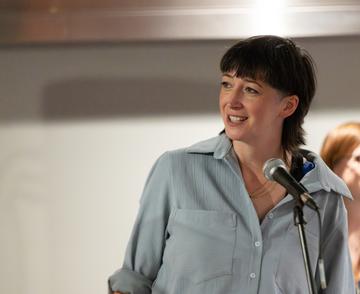
I first came to Oxford in 2004 as an undergraduate on the four-year Lit Hum 1A course. I have to admit I wasn't the most focused of classicists during the first three years; rowing, theatre, the college ball committee - all offered pleasant distractions and possibilities. Beginning the final-year dissertation showed me what I'd been missing. I knuckled down and managed to achieve a perfectly adequate final mark in Greats. After a year 'out' when I tutored alongside caring for my elderly father, I spent a very happy year at the University of Exeter completing a one-year Master's degree. I returned to Oxford for a DPhil in Classical Languages and Literature in 2010. This time I was determined not to miss a single opportunity and made the most of Oxford's superlative range of seminars, lectures, and classes. Support abounded for travel and the building of a nascent scholarly network. Through my college, Corpus, I was able to spend a term at the Scuola Normale in Pisa in 2012 and, via a different Faculty scheme, was a visiting student at Princeton University for a semester in 2013. These were precious and spectacularly generative periods of time when I broadened my perspective on matters within and beyond the academy.
After a stint as a Knowledge Exchange Fellow at The Oxford Research Centre in the Humanities in 2014, I was a teaching fellow at King's College London, then stipendiary lecturer at Balliol College Oxford. I was awarded a Leverhulme Early Career Fellowship back at King's College London (2016-19) and after that I joined the Classics and Ancient History department of Durham University as Assistant Professor of ancient Greek literature. The ways in which Oxford's ethos and resources have enabled me to move and work as I have done are inescapably obvious. But I would certainly not be where I am, whole and happy, were it not for the encouragement and kindly indulgence of the department's many excellent humans (and, occasionally, animals).
Dr Katie Low (Magdalen, 2004); Policy Officer
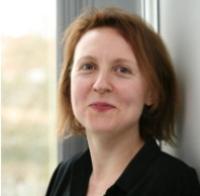
I completed a BA, MSt and DPhil in Classics at Oxford, ultimately writing my doctoral thesis on the Roman historian Tacitus' Annals. I enjoyed my studies, but my commitment to Classics sometimes had to compete with a strong interestin modern European
languages and culture. Fortunately these two passions were not mutually exclusive, especially during my postgraduate years: thanks to a college exchange and understanding supervisors, I was able to spend a year as an exchange student in Paris.
After my viva I worked as a lecturer in Oxford and elsewhere, but then realised I was more drawn to life outside of academia (although recently I have surprised myself by picking up some of my old research interests). I ended up moving to Brussels
in 2015, and since then have mostly worked for the EU in various capacities, initially in communication and subsequently in research and innovation policy; my current role is in an EU public-private partnership on developing sustainable aviation
technologies.
My academic background gave me much that has been useful in Brussels, not least a clear and concise communication style, the ability to absorb information and separate rhetoric from reality, and a historian's sense of the 'bigger picture'. These
transferable skills have allowed me to find roles in several interesting areas - not just aviation but also energy and advanced technology policy - and build a profile focused on coordination, communication and supporting decision-making.
Experience of Latin and Greek, meanwhile, is an excellent basis for learning new foreign languages. Back in Oxford, I would never have dreamed that my career would take this direction, but now I feel that my study of antiquity equipped me
surprisingly well for navigating the modern world.
Douglas Reith, Christ Church 1989; now an actor.

Mods 'A' Literae Humaniores at 36 years old! Daunted? No. Apprehensive? You bet! There I was, a Christ Church 'Fresher' in October 1989,exactly twice the age of the other new bugs. I'd re-sat my Latin and Greek A Levels, to be at least on a par with all the bright and younger things. My initial worries were groundless.
The House is a wonderfully inclusive college, and I was never made to feel out of place by any of my much younger contemporaries. The course tested and stretched me to the limit -sometimes beyond! But I always had the support of wonderful tutors -and fellow students brighter than I. I had resigned from my announcing job with BBC Radio 3 to return to Classics, and I haven't regretted that decision for a second; it was a fantastically enriching 4 Years. I went on to teach at a VIth Form college in London, then briefly at Westminster School, and as a private tutor, until I revived my acting career. I have no doubt that my reading of Greek Tragedy and Comedy has informed and deepened my understanding of performance - even in my role in Downton Abbey! Looking back now, what a privilege it was to have the time and freedom to study some of the greatest literature ever written, and be guided by some of the finest minds available.
Maria Wyard (Corpus Christi, 2008) British Civil Servant
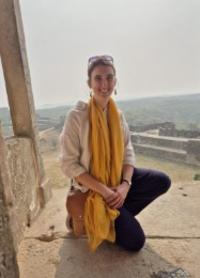
I work for the Foreign Commonwealth and Development Office as the leader of a 30-person group working on health, education, governance and inclusion in Pakistan. In 2027 I will be the Head of the UK's development partnership with Nepal, aiming to support recovery and growth after the recent devastation. I most enjoy making a real difference to people who are living in tougher conditions than me. I also love building my teams' potential and seeing them use their expertise to improve society.
I came into this career not as an expert in development: my only qualification is my Classics BA (which some of my Pakistani colleagues are shocked about). I joined the Civil Service Fast Stream graduate scheme straight after university which tested analytical skills, the ability to synthesise evidence and make practical policy recommendations, oral communication and develop interpersonal skills. The best preparation for me at the time was to drill the numerical and verbal reasoning tests as much as possible.
Languages, philosophy and the tutorial system all very much supported my career. My degree gave me the confidence to digest complex and detailed information and arguments, and communicate my analysis and recommendations to seniors. This is very helpful in Government and working with Ministers or leaders of international organisations.
The other key skills to develop are leadership and collaboration. For this, find time beyond your degree to volunteer, do internships (I did some teaching), and lead initiatives (I ran the Corpus Classics Society for a year).
Dr Kelly Shannon-Henderson (Corpus Christi, 2007) Associate Professor of Classics at the University of Cincinnati.
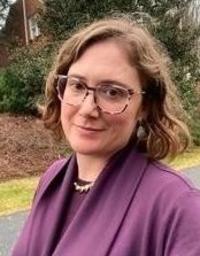
After graduating with a BA in Classics from the University of Virginia, I came to Oxford for the MSt, intending to leave after the year was up to return to the US to enter a PhD program. One term in Oxford changed my mind completely. By the end of Michaelmas, after hitting upon my ideal topic and supervisor for a DPhil thesis, I had my heart set on staying in Oxford for the rest of my postgraduate education, made possible by generous financial support from the Clarendon Fund and the Memoria Romana Project. My goal had always been an academic position in an American university. After two one-year positions along the way (a postdoc in Germany and an adjunct-lecturer position in the US), I landed my first tenure-track job at the University of Alabama in 2014. I arrived at my current post at the University of Cincinnati in 2021.
The excellent training I received in Oxford's Faculty of Classics has helped me achieve these goals. Oxford offered me unique resources and opportunities – particularly its lively seminars, excellent research libraries, and special collections that allow postgraduate students to learn skills like papyrology and palaeography directly from ancient documents and medieval manuscripts – that made me a better Classicist in ways that I still feel daily. My edition and commentary on the Greek paradoxographer Phlegon of Tralles (Brill, Fragmente der griechischen Historiker Part IV, 2022) would not have been possible without the skills I learned in Oxford. Without the excellent mentoring and research training I received while writing my DPhil thesis, I don't know that my first book, Religion and Memory in Tacitus' Annals (Oxford Classical Monographs, 2019) would have come out well enough to merit the Society for Classical Studies' Goodwin Award (2020), that organisation's highest scholarly award. Oxford’s people are perhaps the most impressive of its many resources, and I am still in regular contact with my supervisor and other members of the Faculty, and with many of the friends I made while writing my DPhil, who are now colleagues in departments scattered across the globe.
Daisy Dunn (St Hilda's, 2005) Writer.

I came up to Oxford to read Classics armed with a Latin dictionary, a box of empty ring-binders, and a pink kettle. When I went down in 2009, I had twelve over-filled files, stacks of student newspapers I couldn’t throw away, and, resting on top, the ‘soft cap’ I chose in preference to the mortar board for taking to the university examinations. Seeing my accomplishments piled up like that only blurred the memories of what life had been like as an undergraduate.
There was no room in the car boot for the hours I had spent tracking down articles in the Sackler Library, or listening to lectures on the Homeric Question in Schools, or handling priceless Greek vases and Roman casts, and editing copy in the frantic newspaper offices on St Aldate’s. I studied both Greek and Latin as part of the course, and really enjoyed the opportunity to take papers in Homer and Ovid, as well as in Roman history, art, and the Reception of Classics in twenty-first century poetry. By the end of the final year I wanted to look at the subject from a different perspective, and won a scholarship to study for an MA in Art History of Renaissance Italy at the Courtauld Institute in London. After a break, this led me to embark upon a part-time PhD in the relationship between the two worlds, the ancient and the Renaissance, at UCL, where I was lucky enough to be awarded funding from the AHRC. At the same time I worked as Executive Officer of JACT, which supports the teaching of Classics in schools, and as a journalist. I completed my PhD in 2013. Today I work full time as a writer and critic, and remain involved in the work of JACT and the Classical Association. My first book is very much inspired by the topics I studied as a Classics undergraduate at Oxford.
Adrian Bird CB (Balliol College, 1988) Permanent Secretary
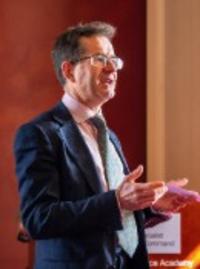
I am a Permanent Secretary in the UK Civil Service. My role is the Chair of the Joint Intelligence Committee (JIC). The JIC is the cross-government committee responsible for providing Ministers with intelligence assessments on strategic national security issues. it's a great job and a huge privilege to serve in the role. The best bit is working with a team of brilliant people to provide the PM with key advice.
I had always been interested in intelligence. After I left Oxford I joined GCHQ (Government Communications Headquarters), the UK's Signals Intelligence and Cyber Agency, as part of the Civil Service Fast Stream. After 29 years at GCHQ I became the Chief of Defence Intelligence in the MoD, moving from there into my current job. I've had a wonderful career in the Civil Service, in a wide range of roles, continually learning and developing my skills.
I loved my time at Oxford, and studying Classics was a deeply informative experience. It wasn't just the subject matter - being immersed in the incredible history, literature, philosophy and art was inspiring; nor just the excellent social life. Classics was foundational because I learned how to think: from the rigour of linguistic work, to the synthesising large amounts of information, to the marshalling of arguments. My best piece of advice? Look to manage your energy rather than your time. We all have the same amount of time, so focus on how you can be at your best when you need to be - and have fun!
Jonathan Wiseman (Lady Margaret Hall, 1999) General Counsel and Chief People Officer at Ocado Retail
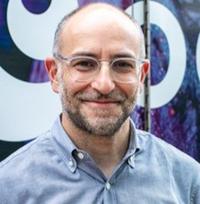
My role is unusual, looking after all things relating to legal, risk and compliance on the one hand, and people and culture on the other. Much like my degree, the things I enjoy most about the role are the variety, intellectual challenge and people I get to work with.
Like many humanities graduates, the idea of a career in law appealed to me, without actually knowing much of what was involved when I signed up! I spent some time in private practice in the City before moving to work in-house at Ocado, who were one of my clients, over a decade ago. I had various legal roles within Ocado over the years, culminating in my current role about six years ago.
The skills I picked up reading Classics and English - closely analysing texts, drawing comparisons across different works, and consuming and synthesising significant amounts of research each week - have stood me in good stead. The tutorial system too, at first terrifying but ultimately hugely enjoyable and intellectually satisfying, was a great training too.
Looking back, it feels like my time at Oxford was at the cusp of two eras: we were all given email addresses, but most communications were still by pigeon post; the internet was available but no-one really knew what to do with it; and it always felt easier to hand-write an essay than find 10p to use one of the (usually broken) college printers! For all that, I'm sure the skills I learnt at the time are similar to those the students learn today.
I'm not sure I'm awash with advice for the current cohort of students but take advantage of everything Oxford has to offer and seek out opportunities as they don't always fall into your lap like they might have done at school!

